
DIVERSIFY4Future: new options for European aquaculture producers
European aquaculture producers are facing higher feed and energy costs, more frequent heatwaves and long licensing procedures, while consumers often know little about how farmed fish and shellfish are produced. DIVERSIFY4Future, a new Horizon Europe project in which FEAP is a partner, will look at how diversification can help farms respond to these challenges, by testing new species combinations, production systems and feed ingredients under real farming conditions.
About the project
DIVERSIFY4Future (Diversifying aquaculture for the future: inclusion of low-trophic species for sustainable, innovative, healthy and circular food systems) started on 1 June 2026 and will run for four years, until May 2030. The project is coordinated by the Aristotle University of Thessaloniki and brings together 33 organisations from research, industry and civil society across Europe and associated countries. The partners met for the first time at the kick-off meeting in Thessaloniki on 29 June 2026.
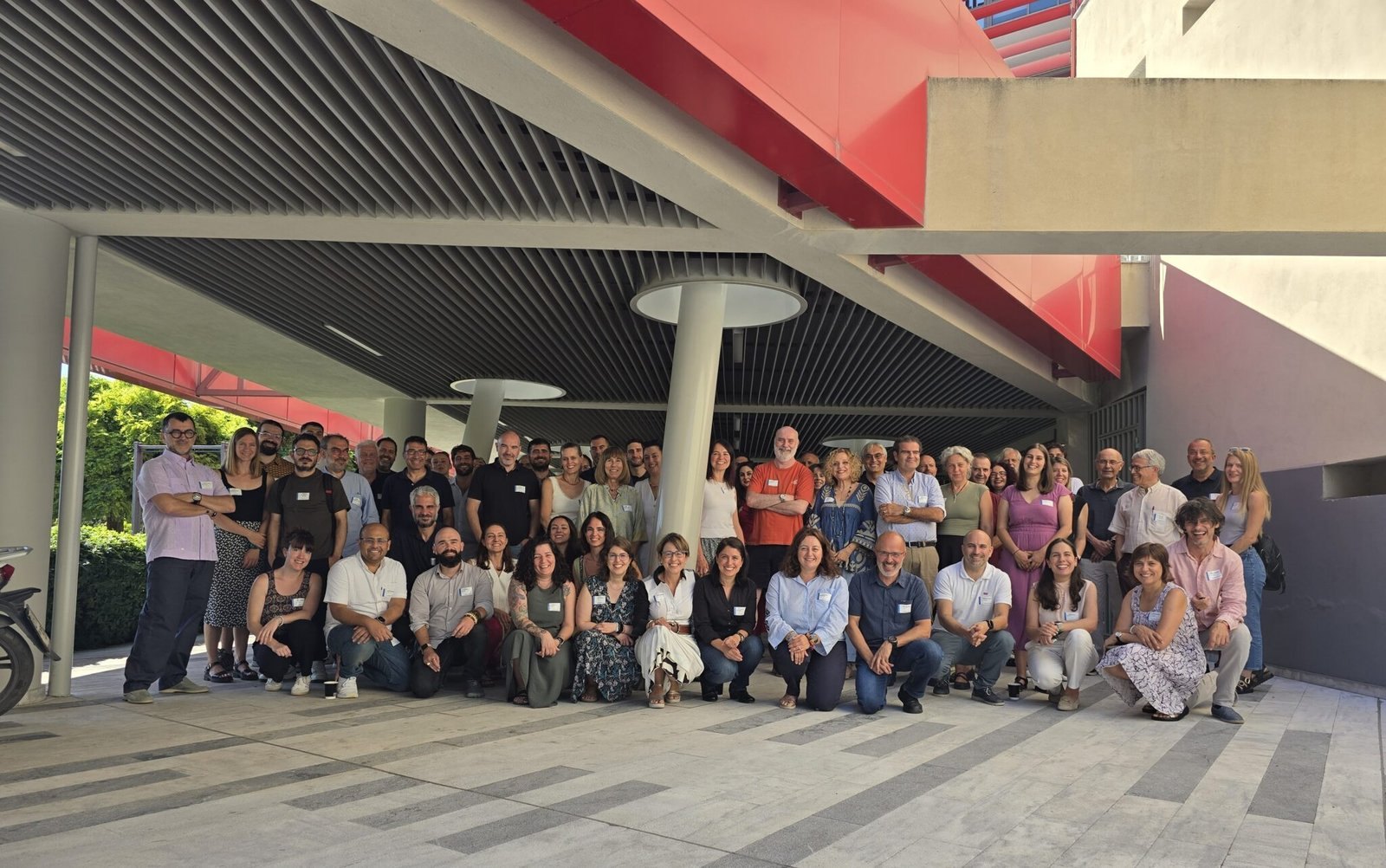
The DIVERSIFY4Future partners at the kick-off meeting in Thessaloniki, June 2026 (photo: DIVERSIFY4Future)
The project focuses on organic aquaculture, integrated multi-trophic aquaculture (IMTA), aquaponic and polyculture systems, and the farming of low-trophic species such as shellfish, seaweed, carp, mullet and rabbitfish. Innovations will be tested in 10 small-scale and 5 commercial-scale studies covering 13 established and new species, in six regions:
- the Mediterranean
- the Black Sea
- the Ebro Delta
- the Nile Delta
- the inland waters of Central and Western Europe
- the North-East Atlantic
The work covers the whole chain, from new feed ingredients based on local by-products, fish health and welfare and smart monitoring tools, to environmental footprint, consumer acceptance, economic feasibility, spatial planning and the regulatory framework.
Why it matters for fish farmers
For many farms, feed is the largest cost, and the dependence on imported fishmeal, fish oil and soy makes them vulnerable to price changes. By developing and testing feed ingredients from local and circular sources, the project aims to offer producers more choice and more stable costs, while keeping fish healthy and growth performance high.
The project will also look at practical tools to help farms adapt to climate change, such as satellite-based monitoring and early warning of harmful events like heatwaves, algal blooms or low oxygen levels on shellfish farms.
Diversification is not about replacing what European producers already do well. It can give farms additional products and income, and better use of nutrients and water, building on existing know-how. Many European farmers, for example in pond carp and shellfish farming, are already producing low-trophic species, and their experience is an important part of the picture.
However, new systems only work if they are also economically viable, if there is a market for the products, and if the rules allow them. This is why the project also studies producers’ motivations and barriers, consumer perceptions, licensing and access to space, and the regulatory and certification frameworks for organic and low-impact aquaculture. Results will feed into policy recommendations to support a more competitive and diverse European aquaculture sector, in line with the EU Strategic Guidelines for aquaculture 2021–2030.
FEAP’s role
As the voice of European aquaculture producers, FEAP will make sure that the farmers’ perspective is reflected throughout the project. FEAP will:
- involve producers and our member associations in the project’s surveys, workshops and stakeholder dialogues;
- contribute to the work on spatial planning, policy and regulation, bringing in the practical experience of farmers;
- help share the project’s results with the sector, including through a policy brief at the end of the project.
FEAP has already contributed to a first project poster on spatial planning for diversified aquaculture systems, presented at Aquaculture Europe 2026 in Ljubljana.
Follow the project
More information is available on the project website, diversify4future.eu, and on the DIVERSIFY4Future LinkedIn page. FEAP members will be invited to take part in project activities, and we encourage producers to share their views, as their input will help make sure the results are useful in practice.
DIVERSIFY4Future has received funding from the European Union’s Horizon Europe research and innovation programme under grant agreement No 101286791. Funded by the European Union. Views and opinions expressed are however those of the author(s) only and do not necessarily reflect those of the European Union or the European Research Executive Agency (REA). Neither the European Union nor the granting authority can be held responsible for them.